Exploring Queer & Trans Joy

Back to Article Listing

Author(s)

GSSW

Communication Team

Craig Hall
Communication Team"

gssw.communications@du.edu

Course on social work with LGBTQIA communities centers joy, resistance and intersectionality

News  •
rainbow painting
Eugene Walls
Eugene Walls

Too often, the narrative about LGBTQIA people centers only harms and violence, but an updated course at the University of Denver Graduate School of Social Work balances the struggles with joy.

The course, Social Work Practice with LGBTQIA Communities (SOWK 4545), was co-developed by Professor Eugene Walls and PhD candidate and Adjunct Instructor Brendon Holloway. The revamped course is intended to facilitate students’ exploration of their own perceptions, biases and belief systems about LGBTQIA identities and communities and challenges them to envision how their own practice will be inclusive of LGBTQIA individuals and communities.

“We don’t want students to think about [LGBTQIA] communities as people who only experience problems, but people who also experience joys,” says Holloway, whose dissertation research is focused on gender euphoria. “We’re moving from a damage-centered focus to a desire-based focus on hopes, joy, goals. We’ve tried to infuse that throughout the course.”
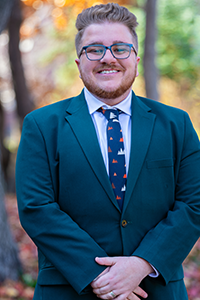
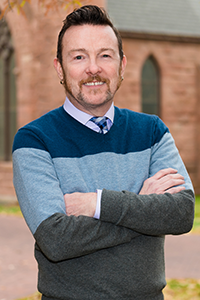
Brendon Holloway
Brendon Holloway

“The infusion of joy and resistance is true to social work’s strengths perspective,” Walls adds. “We should be thinking about the strengths that minoritized people bring.”

The course also emphasizes intersectionality. “We spend a lot of time talking about how having multiple minoritized identities affects the lived experience,” Walls says. For instance, the

experience of being a queer Muslim is very different than the experience of being a queer atheist. Most weeks, the course incorporates videorecorded interviews with community members offering a variety of perspectives, he adds.
Learn more about the course in a short video featuring instructors Eugene Walls and Brendon Holloway.

Watch

SOWK 4545 also incorporates developmental case studies that approximate the experience of working with clients and systems that evolve over the course of the therapeutic relationship. During the week focused on policy, for instance, a trans “client” shares how the state and national discourse on trans rights affects them.

“When therapists and clinicians don’t have awareness of the [LGBTQ+] community and the struggles it goes through, it is so harmful,” says Teaching Assistant Max K., MSW ’23, who discussed Lama Rod Owens' ideas around therapy and liberation with the class. “If you’re queer or trans or pan or bi, if you’re the only person in your group within that community, everyone is going to look to you as if you’re the encyclopedia for the community. It’s the same thing for race or ethnicity.”

“People need to do their own antioppressive work” rather than relying on people with marginalized or oppressed identities to do it for them, Max adds. “When students sign up to take this class, it says they’re willing to do the work.”

The course was piloted for students in the MSW@Denver online MSW program in the fall, and this spring it will be offered in the Denver Campus MSW program as well. The geographic diversity of students in the MSW@Denver course has enhanced the class experience, Walls says. “It’s great to have people talk about what’s happening in their state,” he says. “It reinforces how important it is that social work students think about the political context they’re practicing in.”

Holloway agrees. “Most of my students are living in Southern states where policies are impacting queer and trans people more,” he says. “It’s been really interesting to hear students grapple with the policies in their states.”

The course content spans micro and macro practice and covers emergent policy topics such as anti-trans legislation as well as issues such as weight stigma and anti-fatness; diverse types of relationships, such as polyamory; and mutual aid and imagining a future that emphasizes collective care.

“I’m a queer and trans person, and the class has felt very healing for me,” Holloway says. “This is a class I wish I would have had the opportunity to take as an MSW student. Even though the course is an LGBTQ course, there’s so much depth that goes beyond most courses I’ve ever taken or taught.”

Courses like SOWK 4545 are needed, Holloway adds, because “queer and trans people are everywhere and exist in all spaces. Having this well-rounded education will benefit every social worker in our program.”

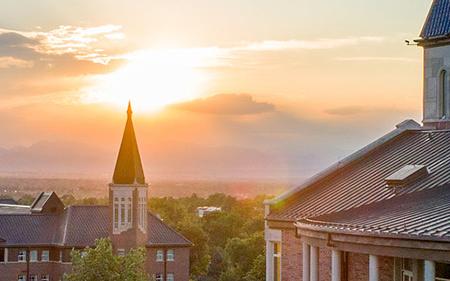
university of Denver Campus

GSSW offers MSW programs in Denver, Durango and Glenwood Springs, Colorado, as well as online.

Explore MSW Programs