Developing Global Practice Bosnia
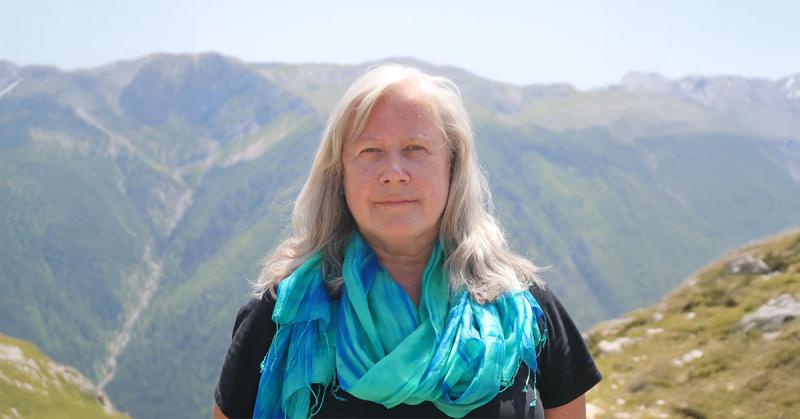
While she was growing GSSW’s field program, Petrila was also growing GSSW’s international portfolio, including developing the school’s Global Practice Bosnia program. In 2007, a handful of GSSW students were completing internships in Bosnia via DU’s Office of Internationalization, which needed someone to travel to the country to do agency development work. They asked Petrila to go, and she quickly said yes. What was supposed to be a one-time trip turned into Petrila’s life’s work. She says, “It just blossomed into this gift in my life — this chance to work together, to bring what I can to them and learn from them. Bosnia became a second home.”
Then-Dean James Herbert Williams asked Petrila to return to Bosnia to develop a relationship with the school of social work there. Petrila recalls, “We created an official agreement between the schools so we could take students there and they could come here. I developed the immersion course, but it took me a while — I needed to know enough and be connected enough in the community to be invited in.”
Petrila has since taken more than 300 students to Bosnia for immersion experiences and internships. Sladjana Todorovic, MSW ’16, was one of them.
Todorovic had fled the Bosnian conflict with her parents when she was 7; the family resettled in Minnesota and had never been back. When Todorovic was looking at MSW programs and touring GSSW, she noticed a poster for the Bosnia program on Petrila’s office door. She saw it as a sign she should attend DU.
“In the first week of class, I knocked on her door. She gave me a big hug and said, ‘Let’s talk,’” Todorovic recalls. “That summer I joined her as a student on the program.” Todorovic returned the next summer as Petrila’s assistant, and their relationship blossomed into a lasting friendship.
Todorovic recalls, “Growing up as different, I was always kind of embarrassed. But being [in Bosnia] made me so proud. Ann highlights the resilience of the people there. That shift to feeling a sense of pride … just learning about the war at that time, it was just shocking. I didn’t know how to process it and couldn’t believe how much I didn’t know about it. It was my first time learning about it. As our relationship evolved from being my professor to colleague to friend, she helped me process feelings I couldn’t talk to my family about.”
Todorovic notes that through the deep relationships she developed in Bosnia, Petrila is trusted to “hold their stories — raw, traumatic, beautiful, powerful stories.” Petrila shared some of those stories in the book “Voices from Srebrenica: Survivor Narratives of the Bosnian Genocide” (McFarland, 2021), co-authored with genocide survivor Hasan Hasanović, director of the Oral History Project at the Srebrenica Memorial Center. The book documents the killing of more than 8,000 Muslim men and boys, sharing eyewitness accounts of the genocide and “revealing stories of individual trauma, loss and resilience.”
Petrila became GSSW’s coordinator of global initiatives in 2018, co-chaired the former Sustainable Development and Global Practice concentration with Clinical Professor Sarah Bexell and introduced the school’s Global Social Work certificate in 2021. Ross says, “Ann was a big part of the ideas of how you prepare students to go abroad and to be respectful and understand the culture. Her ability to prepare students to have cultural humility and take on multiple points of view is almost bar none.”
The Council on Social Work Education has recognized Petrila’s impact with the 2025 Partners in Advancing International Education (PIE) Individual Award, which honors her work to advance global social work education.
Although she retired from the GSSW faculty this summer, Petrila doesn’t see her work as done. Leaving the front of the classroom will give her more time to focus on her own doctoral studies, her health and her ongoing work in Bosnia. She says, “It was a really hard decision to leave, but I can continue to do work that will hopefully have an impact. I feel so grateful for all of the students who were interested in what I do and willing to learn about something so hard to learn about — the need to intervene early in human rights violations.”