Global Research Impact

Back to Article Listing

Author(s)

GSSW

Communication Team

Craig Hall
Communication Team"

gssw.communications@du.edu

Four GSSW faculty are included on the 2025 Stanford University/Elsevier list of top 2% of world scientists
News  •
GSSW Professors

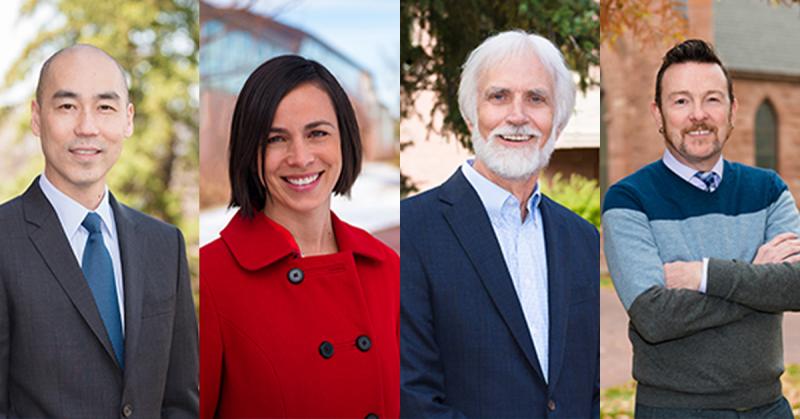
University of Denver Graduate School of Social Work (GSSW) Professor Kimberly Bender, recently retired Professor Eugene Walls and Professor Emeritus Jeffrey Jenson have again made the Stanford University/Elsevier list of the world’s top 2% of scientists. This year, GSSW Professor Johnny Kim joined them among the ranks of the world’s most impactful social scientists.

The four GSSW professors are among 31 University of Denver faculty members included in the annual ranking of the world’s most influential researchers across a broad range of fields.

Based on data from Scopus, the annual top 2% list provides a standardized way to recognize scientists who have made a significant impact in their respective fields. It draws from a variety of citation metrics — including h-index, co-authorship and adjusted citation counts — to ensure fair and balanced researcher representation. Scientists are classified into 22 broad fields and 174 subfields, and only those who rank in the top 2% of their subfield are included. The 2025 ranking is available for both career-long and single-year impact (through the end of 2024).

GSSW Dean Henrika McCoy states, “Professors Kimberly Bender, Johnny Kim, Jeffrey Jenson and Eugene Walls are exceptional scholars, teachers and mentors whose work is continuing to transform social work science, education and practice. They are true leaders in social work and the work of social change.”

Kim’s research focuses on clinical interventions to improve mental health outcomes for adolescents and families in community and school settings. He is known as one of the world’s foremost experts in solution-focused brief therapy (SFBT), serves on the Research Committee for the Solution-Focused Brief Therapy Association and has written five books on the topic, including “Solution-Focused Brief Therapy with Families: A Training Manual” (American Psychological Association, 2025). In November 2025, Kim received the Solution-Focused Brief Therapy Association’s prestigious 2025 Steve de Shazer Award, recognizing his groundbreaking research and practice in solution-focused brief therapy.

Kim says, “It is an honor to be included among the world’s most impactful scholars. It is incredibly rewarding to know that my work, and the work of my many collaborators, is being used to improve interventions and outcomes for children and families.”
In a Brave Ideas for Social Change podcast episode, Professor Johnny Kim discusses his work to expand mental health care access for adolescents.

Listen

GSSW’s Philip and Eleanor Winn Endowed Professor for Children and Youth, Bender focuses her research on young people experiencing homelessness. She is striving to understand their needs, engage them in social-change projects and help them to develop skills that can prevent adverse experiences. She has served as co-PI on a six-state, multi-site research project to better understand risk and protective factors among youth experiencing homelessness. Funded by the National Institute on Drug Abuse, she also served as PI on a three-year randomized trial of a mindfulness-based intervention to prevent victimization and substance use among youth in emergency shelters. In 2023 as a Fulbright Fellow, Bender studied youth participation and activism in Taiwan. Bender is also an American Academy of Social Work and Social Welfare (AASWSW) Fellow.

Jenson, the Philip and Eleanor Winn Endowed Professor Emeritus, has predominately focused his research in two areas: applying a public health approach to preventing child and adolescent health and behavior problems and evaluating preventive interventions aimed at promoting healthy youth development. Jenson has published nine books and numerous articles and chapters on topics related to child and adolescent development and prevention science. He served as a co-lead for the Grand Challenge to Ensure Healthy Development for All Youth and is an AASWSW Fellow. He retired in 2020, and in 2022 he received the Society for Social Work and Research Distinguished Career Award.

Until his retirement at the end of the 2024–25 academic year, Walls focused his research primarily on risk and resilience across the lifespan of lesbian, gay, bisexual, queer, transgender and nonbinary communities from an intersectional perspective, as well as the integration of social justice in social work education. Known nationally as an anti-oppressive scholar, Walls’ most recent endeavor is a forthcoming edited volume with Cambridge University Press that outlines a decolonial, critical approach to quantitative methodology in social work research. He says, “For too long we have trained emerging social work scholars in quantitative methods-as-usual that fail to live up to our profession’s goals of liberation and equity. Our hope with this new book is to give scholars the needed tools to enable our work to have an even greater impact.”

According to Bender, “At GSSW, our research and scholarship are focused on advancing social justice and meeting community needs. It is gratifying to know that our work, and the work of our many community partners and collaborators, is being read, cited and used for social change.”

university of denver campus

Your gift to GSSW’s Gather & Grow Impact Fund will support continued innovation in research, education and community impact.

Give