February 2026 Dean's Note
Author(s)
Henrika McCoy
Morris Endowed Dean
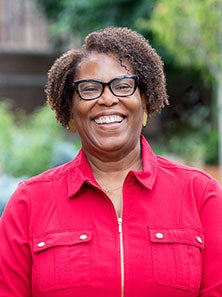
It is February, which means it is Black History Month. The observance of Black History Month began in 1926 in Chicago (my hometown) as Negro History Week, an initiative by Carter G. Woodson, PhD, and the Association for the Study of Negro Life and History. Dr. Woodson pursued this endeavor because he believed our society should recognize and honor the countless ways that Black women and men advance humanity and our civilization. As the second African American to earn a PhD at Harvard University, he was devoted to ensuring that history was accurate: “We should emphasize not Negro History, but the Negro in history. What we need is not a history of selected races or nations, but the history of the world void of national bias, race hate, and religious prejudice” (Woodson, 1927, p. 105).
Thus, at a time when we see the removal of Black history at sites of remembrance, such as the exhibit detailing the lives of nine people enslaved by President George Washington in Philadelphia (now re-installed) and exhibits being ordered to be removed from the Smithsonian’s National Museum of African American History and Culture, we should be reminded of Dr. Woodson’s words. We are at a time when those who have been marginalized are being further marginalized, those who have been oppressed are experiencing further oppression, and fundamental civil and human rights are being eroded. The work of social work is more important now than ever, and social workers are uniquely prepared to lead the charge for social change. In honor of Black History Month, we are recognizing some of GSSW’s Black social change leaders, past and present.
I would encourage you to read about GSSW alumnus John Mosley, Jr. (MSW ’49). He was both a Tuskegee Airmen pilot and a civil rights leader. Our Denver Campus MSW Assistant Program Director Anthony Jones (MSW, MA, LSW) recently brought him to my attention, and the timing could not have been more perfect. Mr. Mosley was certainly a remarkable figure in the history of Colorado and the nation.
We have previously featured alumnus and Professor Emeritus William Cloud (PhD ’87), but this is a great time to learn about what he has been doing since retirement. He is widely recognized for co-developing the concept of recovery capital, which has reshaped the addiction treatment field, and he has a chapter in a new book on recovery capital. I am grateful for his willingness to join our new GSSW’s Dean’s Circle as an inaugural member.
Our third feature is about a more recent graduate, Alli Jackson (BA ’17, MSW ’18). She is a new member of the Aurora, Colorado, City Council, who has committed herself to addressing issues such as police reform. Read more about her path to politics.
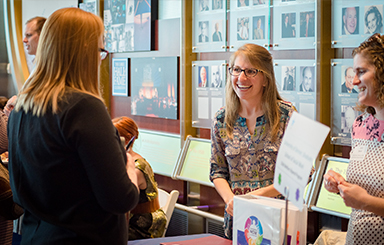
At GSSW, we are pleased to display the African American Experience Timeline, which traces the history of Black people in the United States. It was created to combat misinformation and foster conversation, thus serving as a counterpoint to the erasure of history that is happening elsewhere. Timeline creator Richard Lewis is the vice chair of our new GSSW Board of Advisors, founder and CEO of RTL Networks Inc., and founder and board chair of the RTL Foundation. Please take a few minutes to read about Mr. Lewis and some of the RTL Foundation’s initiatives to support BIPOC-led organizations and communities.
I hope that you will find this newsletter educational and inspiring. We are at a critical juncture in our society, and it will take each of us to create social change that is for good. In the spirit of John Lewis (1940–2020), American civil rights leader and long-serving U.S. Representative for Georgia’s 5th Congressional District, make this your time to “get in good trouble.”
Henrika McCoy, MSW, MJ, PhD
Milton Morris Endowed Dean of Social Work and Professor